About dope dyed absorptivity of dty.
Dope Dyed Absorptivity of DTY
Polyester Drawn Textured Yarn (DTY) is a kind of yarn produced by twisting and drawing of Polyester Partially Oriented Yarn (POY). It is available in two lusters: Semi Dull & Trilobal Bright.
It can be used to make textured fabrics for various applications. It can be made in different color by dope dyeing.
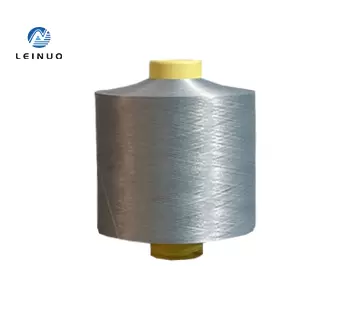
Blackness
Dope dyed absorptivity of dty is a technique used for pre-dyeing yarns, then making fabrics from them. This is a very eco-friendly process because it saves loads of water and energy and reduces environmental pollution. It also decreases waste discharge in textile factories.
In traditional methods of dyeing, fibers are spun, then a solution of polymer and color pigment is mixed together to give the fabric a new color. Then the fabric is knitted or woven. However, this is not the most environmentally friendly way of doing it, as the chemicals and dyes used in the spinning process can cause large amounts of water pollution.
Therefore, the inventors have been investigating a method of dope-dyeing polyester fibers that can provide them with a desirable deep blackness. The DTY inventors discovered that the carbon blacks obtained by a wet oxidation treatment with peroxides of gas phase oxidized carbon blacks can be used as dope dyeing colorants.
The inventors further found that the reddish tone characteristic of the carbon blacks can be eliminated with a process of wet oxidation-neutralization, and the dope-dyed polyester fibers can obtain a deep blackness with a bluish tone. The dope-dyed polyester fibers obtained by the present invention have been provided with a deep blackness and a bluish tone without causing any polymer deterioration or filament breakages as compared to those dope-dyed with conventional black liquid colorants.
Another important benefit of the dope-dyeing process is that it eliminates the need to add carbon blacks directly during the polyester polymerization, which would have the disadvantage that heavy staining of the polymerization tanks would necessitate the installation of additional tanks for use only as well as a time-consuming cleaning work. Moreover, the dope-dyed polyester fibers made by this process show good rubbing and washing fastness and are very strong, making them useful for the manufacture of clothing items such as underwear, Lingeries, etc.
The invention has a low viscosity and high carbon black content, which means that the dope-dyed polyester fibers have a blackness that is as deep as possible. Further, the dope-dyed polyester fibers do not contain any coarse particles that are liable to cause filter cloggings and filament breakages in the spinning step.
2. Jetness
Among polyester fibers, dope dyeing with a carbon black obtained by the addition of carbon black at any step from polymerization to fiber-formation has been widely used. However, the dope dyeing processes wherein the carbon blacks are directly added during the polyester polymerization have disadvantages such as heavy staining of the polymerization tanks necessitating the installation of additional tanks for the exclusive use as well as time- and labor-consuming cleaning work.
In order to eliminate these disadvantages, a dope dyeing process using a color concentrate has been proposed in Japanese Patent Application Laid-open No. 60-45,689. Notwithstanding the liquid colorants have many advantages as a colorant for polyester fibers, some problems remain unsolved when these liquid colorants are practically used in the dope dyeing of polyester fibers.
The inventors have conducted extensive assiduous studies to solve the above mentioned problems and to thereby provide the polyester fibers with a desirable deep blackness in an effective manner. The present invention has been a result of these studies. Specifically, the invention relates to a black liquid colorant for dope dyeing of polyester fibers which comprises 5-50 weight % of oxidation-neutralization-treated carbon black obtained by subjecting a gas phase oxidized carbon black to a wet oxidation treatment with a peroxide and a subsequent neutralization and 95-50 weight % of a liquid dispersion medium such as liquid polyester.
This black liquid colorant has high carbon black contents and is little liable to deteriorate the polyester fibers and can minimize a reddish tone characteristic of carbon blacks, which are regarded as undesirable by users of dope-dyed polyester fibers, thus providing them with a deep blackness as intended. The black liquid colorant is also low in viscosity, enabling the dope-dyed polyester fibers to be provided with a desired deep blackness without any polymer deterioration or filament breakage.
Further, the black liquid colorant of the invention can reduce the pH value of the carbon blacks and thereby increase the jetness of the dope-dyed polyester fibers without increasing the viscosity of the liquid colorants. The inventors have found that the gas phase oxidized carbon blacks with a pH value of 4.0 or less are especially suited to reduce the reddish tone characteristic of carbon blacks, increase the jetness and lower the viscosity of the resulting liquid colorants
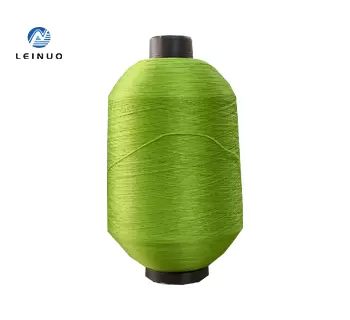
3. Wetness
Dope dyed fabrics are made from a pre-coloured yarn that has been spun using pellets of the color pigment embedded directly into the fibres. This is a more environmentally friendly way of dyeing that saves loads of water and energy. The yarn is also better supported and is more durable as it doesn't have to be subjected to a number of chemical solutions.
Wet processing is a major cause of pollution to the environment, particularly in the textile industry, where desizing, scouring, mercerizing, bleaching and dyeing are employed as part of conversion of fibres to fabric. These operations require large quantities of water, and their effluents contain a complex chemical composition.
During the process of dope dyeing, black liquid colorants are used to obtain black Polyester yarn fibers having a deep blackness with no reddish tone characteristic of carbon blacks. The black liquid colorants are comprised of carbon blacks that have been wet oxidized in a gas phase and neutralized. They have low viscosities and high carbon black contents, which make the black liquid colorants little liable to deteriorate the polyester fibers dope-dyed therewith.
The black liquid colorants are prepared by wet oxidation-neutralization treatment of a gas phase oxidized carbon black having a pH value not exceeding 4.0. This method is preferred, because it provides a uniformly oxidized surface of the carbon black that can minimize the occurrence of the reddish tone in dope-dyed polyester fibers.
Further, the black liquid colorants are preferable to have an average particle diameter of about 14 nm or less. When the average particle diameter is higher, the elimination of the reddish tone may become difficult.
In order to minimize the occurrence of the reddish effect, the black liquid colorants are also preferred to have high carbon black content. This is because the high carbon black content enables the deep blackness to be obtained even when the average particle diameter is lower than 14 nm.
Furthermore, a black liquid colorant for dope dyeing of polyester fibers is preferred to contain 5-50 weight % wet oxidation-neutralization-treated carbon blacks obtained by subjecting a gas phase oxidized carbon black to a wet oxidation treatment and a subsequent neutralization. This method is also preferred for increasing non-agglomerating properties and bluing effects of the black liquid colorants.
4. Absorption
Dope dyeing of fiber stock (or yarns) is a common method used for pre-colored cellulose or non-cellulose fibres before filament spinning to produce fabrics. This process saves loads of water and energy by condensing several steps in one.
This type of dope dyeing can be accomplished by adding colorants to a solution of polar water-miscible solvents or by dissolving pigments directly in the spinning dope. The color yarn can be selected from the commercially available range of acid-resistant, water-based dyes, cationic dyes, and azo and alkaline-based dyes.
In dope dyeing, colorants are bonded to a polymer matrix during melt spinning. During the dyeing process, the colorants can act as nucleating agents to influence the crystallinity of the yarn. Unlike conventional exhaust dyeing, dope dyeing does not cause hydrolytic degradation of the polymer, so it preserves mechanical properties such as crystallinity and tenacity.
Moreover, the process does not increase waste generation due to high-temperature exhaust dyeing, since the colorants are incorporated into the polymer matrix during melting. Furthermore, dope dyeing can provide a sustainable alternative to conventional exhaust dyeing of biobased polymers.
Another disadvantage of using liquid colorants in dope dyeing of polyester fibers is that they tend to be poor dispersible. In order to avoid this problem, it is preferred to use carbon blacks obtained by wet oxidation treatment with peroxides of gas phase oxidized carbon blacks that have a pH not exceeding 4.0 and followed by neutralization. This oxidation-neutralization treatment is believed to prevent the deterioration of the surface of the carbon blacks in the dope-dyed polyester fibers and minimize the reddish tone characteristic of carbon blacks. The wet-oxidized carbon blacks are also able to decrease the viscosity of the resulting liquid colorants, and therefore increase the carbon black content.
According to the invention, a black liquid colorant for dope dyeing of polyester fibers is provided, which comprises 5-50 wt% carbon black obtained by wet-oxidation treatment with peroxides of carbon blacks containing a pH not exceeding 4.0 and followed in neutralization; and 95-50 wt% liquid dispersion medium such as liquid polyester. The black liquid colorant is little liable to deteriorate the polyester fibers and minimizes the reddish tone characteristic of carbon blacks, so that the dope-dyed polyester fibers have a deep blackness with a bluish tone.


Comments
Post a Comment